Wake up the muscles that protect your spine in minutes a day.
Desk. Car. Couch. Eight to ten hours a day, most days, for years. You're 30-40, you used to be active, maybe seriously active and somewhere along the way your lower back started making decisions for you.
If you nodded at two of those, this page was written for you. Give it five minutes — it will explain more about your back than the last five years of advice.
The ache is real. But it's not what's been eating you. What's been eating you is what the pain quietly took, one careful movement at a time.
Before the day even starts, you negotiate with your own body. "How bad is it today?" A man your age shouldn't need permission from his spine to get out of bed.
A colleague catches the grimace when you stand up. You wave it off. At home you don't tell your wife how bad the evenings actually are. You carry it alone. That's the exhausting part.
Your kid runs at you, arms up. There's a flicker — "if I lift him, I pay tonight." You lift him anyway. But you hate that the calculation exists at all.
You've started saying "not this time, mate." The weekend game, the move, the rough-and-tumble on the floor. Not because you're weak, because you're careful now and careful is a full-time job.
You're not fragile. You're not old. And this little voice saying "maybe it's just age, maybe this is life now" It's wrong.
Here's why: the problem was never damage. Keep reading.
Every one of these attacks the pain : the symptom. None of them touches the reason the pain keeps coming back. That's why the relief never lasted.
None of this is your fault. You were handed symptom-management and told it was a plan.
What you were never handed is the mechanism. The actual reason a strong, healthy man ends up with a back like this. That's next.
Your body runs on one rule: what you don't use, it powers down. Sit 8+ hours a day for years and the deep support system of your spine; glutes, deep core, spinal stabilisers goes dormant. Not damaged. Offline.
Desk, car, couch. The support muscles have no job to do, day after day.
Glutes, deep core, stabilisers go quiet. The body archives what it doesn't use.
Passive structures and a few overworked low-back muscles take every load alone.
That's the ache. Overload — not injury. It's your back asking for backup.
You move less, brace more, sit more carefully. The system sleeps even deeper.
You can't stretch a muscle awake. You can't massage it awake.
You have to load it awake — carefully, progressively, in the right order.
This is also why your scan probably came back "normal", and why "it's mechanical, learn to live with it" felt so useless. Nothing is broken. Your back isn't damaged, it's undefended. And undefended is trainable.
A structured strength method that wakes the system up, builds it back, and makes it hold under real life. Built with elite-sport rigour, sized for a man with a job, a family, and no time to waste.
Calm the flare-ups and reconnect the muscles that actually stabilise your spine, the ones your chair put to sleep. Minutes a day, from your living-room floor.
Progressive strength through hips, glutes and core. This is where "careful" turns back into capable — where your body starts earning your trust again. From here you train in a gym: dumbbells, a bench and a few machines required.
Bend, lift, carry, play — strength that holds when life is unpredictable. You stop training around your back and start living past it. Gym-based, like Rebuild.
Every session mapped across Repair → Rebuild → Perform. Open the app, press play, follow the plan not your mood.
Coach-led demos and cues so your form is right the first time; the line between building and re-injuring.
Weeks 1–3 (Repair) need only a floor — no equipment. From week 4, Rebuild & Perform are gym-based: dumbbells, a bench and a few basic machines required.
The plan tells you when and how to add load. Progress you can feel, without plateau or overreach.
A bad day doesn't send you back to zero. Know exactly how to modify and keep momentum.
You measure your own pain and strength as you go. You'll see whether it's working — in your numbers, not vibes.
Your whole program in your pocket. Press play and do the work.
You stand up from your desk in one motion — and don't even notice.
Your kid runs at you, arms up. You swing him up mid-laugh. No maths.
Your mate needs help moving Saturday. You say "I've got it" , and mean it.
The morning audit? You forgot you used to do that.
And under all of it: your body is yours again — not something you manage.
You're not buying exercises. You're buying back the version of you people could count on.
"Nine years of 'just live with it'. Week 5 I picked my daughter up off the floor without thinking — only clocked it an hour later. Was pretty skeptical going in, honestly. The first weeks are just you and the floor; the back half I did at my local gym."
"Not a magic pill — you've got to do the work, and from phase 2 I had to sort a gym membership for the weights. But it's the first plan that actually gave me a finish line. Day 56 vs Day 1 said it all."
"Standing desk, ergo chair, a drawer full of gadgets. Turned out I just needed a stronger back. Weeks 1–3 at home, then into the gym for the heavier stuff. Worth every session."
"The two-stage stand-up after long drives — gone around week 4. My wife noticed before I did. Heads up: you'll need gym access for the second half, so plan for that."
"Thought it was just my age. Turned out it was 25 years of sitting. Took me a bit longer than 8 weeks, to be fair — but I'm back lifting in the gym, carefully and without the fear."
"Nine years of 'just live with it'. Week 5 I picked my daughter up off the floor without thinking — only clocked it an hour later. Was pretty skeptical going in, honestly. The first weeks are just you and the floor; the back half I did at my local gym."
"Not a magic pill — you've got to do the work, and from phase 2 I had to sort a gym membership for the weights. But it's the first plan that actually gave me a finish line. Day 56 vs Day 1 said it all."
"Standing desk, ergo chair, a drawer full of gadgets. Turned out I just needed a stronger back. Weeks 1–3 at home, then into the gym for the heavier stuff. Worth every session."
"The two-stage stand-up after long drives — gone around week 4. My wife noticed before I did. Heads up: you'll need gym access for the second half, so plan for that."
"Thought it was just my age. Turned out it was 25 years of sitting. Took me a bit longer than 8 weeks, to be fair — but I'm back lifting in the gym, carefully and without the fear."
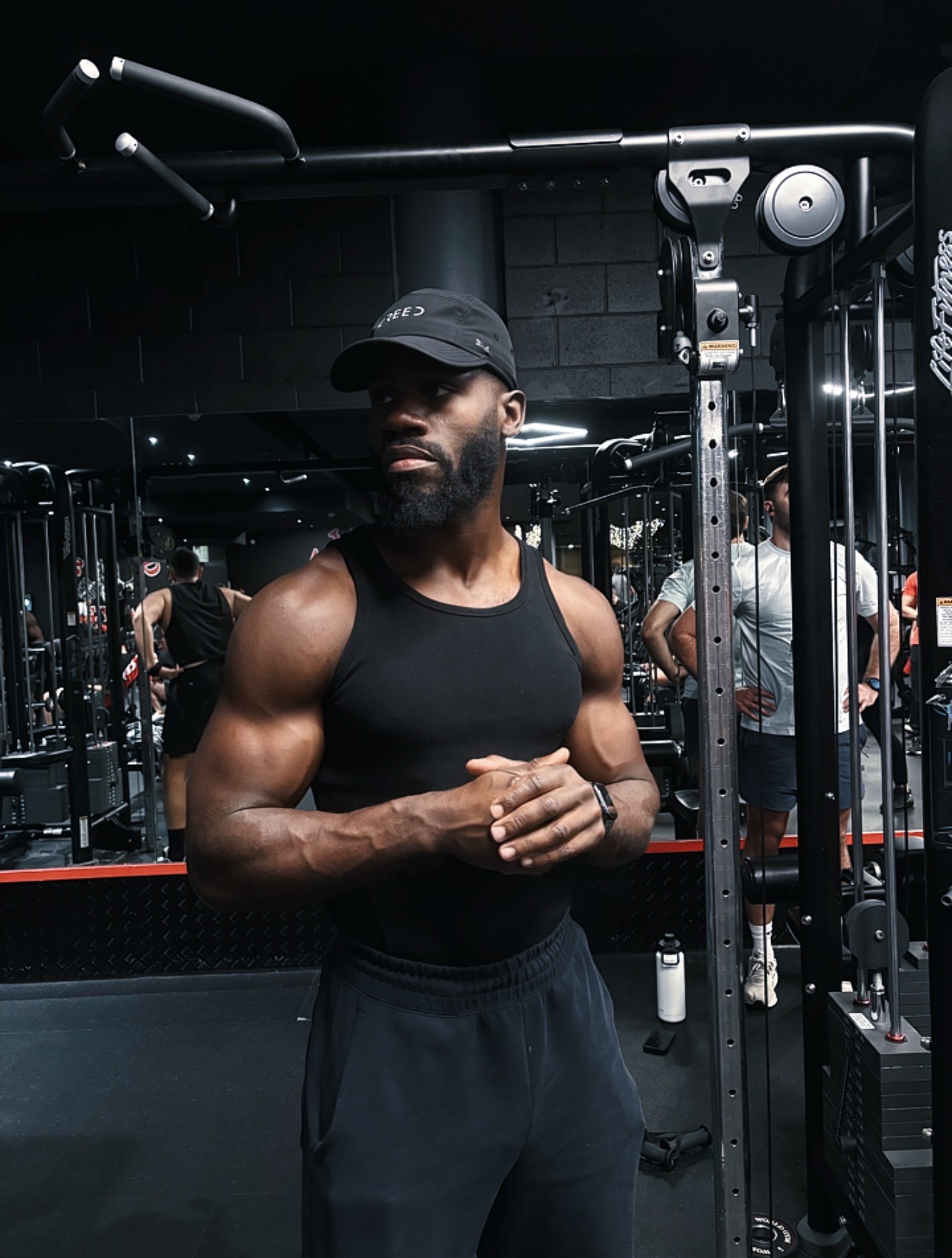
I come from elite rugby. I know what it is to have a body that performs on demand and I know exactly what it takes from you when that body starts saying no.
When my back went, I got the same runaround you have. Rest it. Stretch it. Manage it. What nobody handed me was a plan to rebuild, to come back stronger than before the pain, not just quieter.
So I built the plan I wish I'd had, with the tools elite sport gave me: assessment, progression, load, stripped of ego and sized for real life. One outcome: a back you don't have to think about anymore.
I'm not here to pity you or baby you. I respect what you're carrying, and I know you're capable of a lot more than "careful." Let's go get it.
This isn't another expense. It's the end of a recurring one.
You measure your own pain and strength on Day 1, 28 and 56. By week 8 you'll see whether it worked — in black and white, your numbers, no spin.
Train the full first two weeks. If your back doesn't feel like it's starting to change, email me within 14 days and I'll refund you in full. No hoops, no hard feelings. You've been disappointed enough times; this one costs you nothing to find out.
It's a real option. It's just not a free one.
The man who says "I've got it" and means it, he's eight weeks away.
Here's the whole page in one paragraph: your back pain probably isn't damage, scans usually agree. Years of sitting put your spine's support muscles to sleep, so your lower back does the work alone and screams about it. Stretching, massage and better chairs manage the symptom; they can't wake a dormant system. Progressive load can.
Back Bulletproof™ is an 8-week method that wakes those muscles up and builds them back in a few minutes a day — no equipment for weeks 1–3, a gym required from week 4 — coached by video in the Playbook app. $67 once (first 50 members, then $97), ≈ $100 AUD, lifetime access, 14-day money-back guarantee.
Two ways to find out if it works: your own numbers on Day 1, 28 and 56 — or another year of the 4pm fist in your back. Claim your founder spot →